- Reviews
- Best Classic Cars
- Ask HJ
- How Many Survived
- Classic Cars For Sale
- Insurance
- Profile
- Log out
- Log in
- New account
Suzuki Cappuccino (1993 – 1995) Review
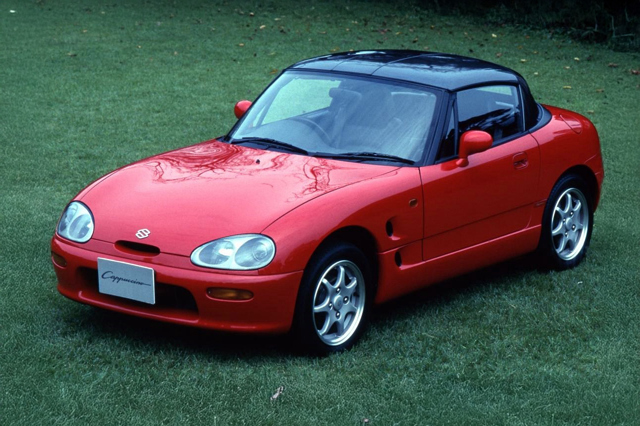
Suzuki Cappuccino (1993 – 1995) At A Glance

Cute-looking roadster with an eager, high-revving turbocharged engine.
Not all engines last the distance and rear brake calipers are susceptible to leaking.
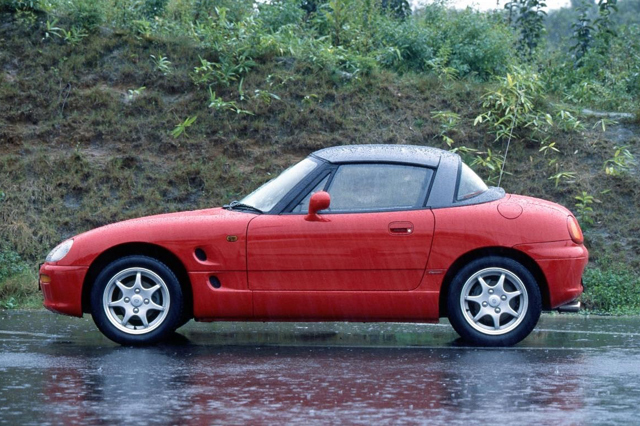
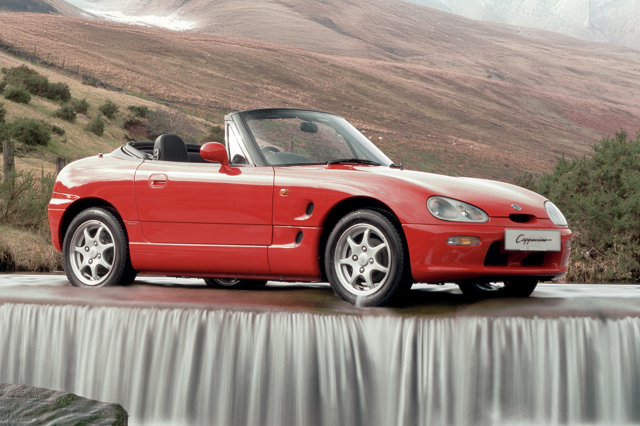
The Suzuki Cappuccino is a rev-happy small roadster originally built to comply with Japan's strict Kei-car regulations. As such it's very small, just 3295mm long, 1395 wide and weighs just 725kg.
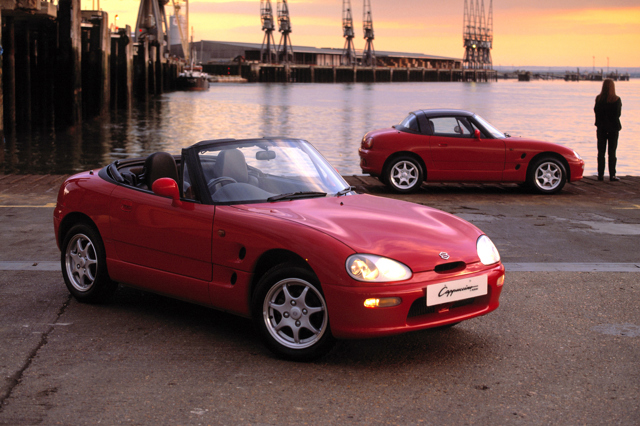
Its modern take on the classic roadster means it's one of the few Suzukis sold in the UK to pick up cult status and go on to become a classic. Limited numbers helped – a total of just 1110 official cars made it over here; 888 in red and 222 in silver, though there are a number of grey imports.
New emissions regulations across the EU meant that the UK never saw the re-enginneered Cappuccino that was introduced in Japan in 1995. This model had a new chain-driven lighter engine and increased torque, but the cost of making the changes required for the European market were prohibitive. It meant that Cappuccinos were on sale in the UK for just two years.
Fans have been calling for a replacement ever since, and despite Suzuzi teasing with motor show concepts, it remains the firm's only sports car.
Model History
- February 1987: Suzuki starts work on a new two-seater sports car.
- October 1989: A concept version is shown at the Tokyo Motor Show.
- October 1990: Kei-car rules change, allowing slightly longer cars and engines of 660cc instead of 550cc.
- June 1991: Cappuccino sales begin in Japan
- October 1992: Suzuki Cappuccino makes its debut at The British International Motor Show
- October 1993: Suzuki Cappuccino goes on sale priced from £11,995
- September 1995: Suzuki Cappuccinco discontinued in the UK
- October 1997
- February 1998: The last cars are sold in Japan
February 1987
Suzuki starts work on a new two-seater sports car.
October 1989
A concept version is shown at the Tokyo Motor Show.
October 1990
Kei-car rules change, allowing slightly longer cars and engines of 660cc instead of 550cc.
June 1991
Cappuccino sales begin in Japan
October 1992
Suzuki Cappuccino makes its debut at The British International Motor Show
Following detailed discussions between Suzuki's UK importer and 23 technical changes to meet type approval, Suzuki shows the Cappuccino in the UK for the first. Response is positive and it goes on to win the show's IBCAM “Best Sportscar under £20,000” award.
October 1993
Suzuki Cappuccino goes on sale priced from £11,995
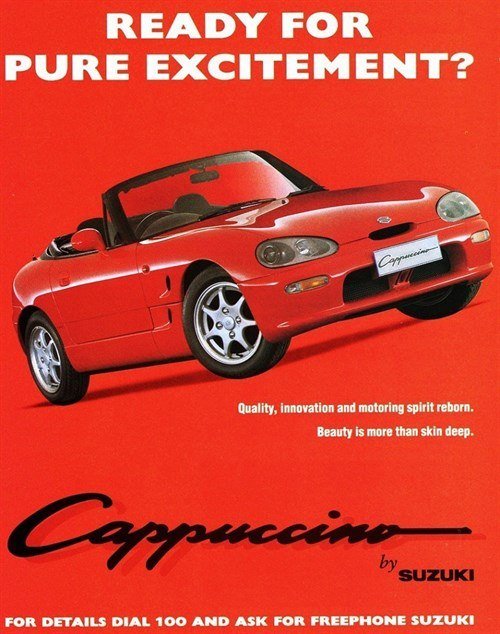
A year on from its motor show debut, the Cappuccino finally arrives in UK showrooms in a choice of red or silver – 80 per cent of cars are red, 20 per cent are silver. Equipment includes alloy wheels, electric windows, air conditioning, three-spoke steering wheel, tilt and telescopic steering wheel adjustment, three panel aluminium hard top, tinted glass, side impact protection beams, lockable glovebox and centrebox and reclining and sliding sport seats.

September 1995
Suzuki Cappuccinco discontinued in the UK
Stricter emisions laws meant that it was prohibitive to re-enginneer a new variant of the Cappuccinco with a chain-driven engine for UK type approval and the Cappuccinco is axed in Europe. Just 1110 cars are sold.
October 1997
The final Cappuccinos are made
February 1998
The last cars are sold in Japan
Driving Suzuki Cappuccino (1993 – 1995)
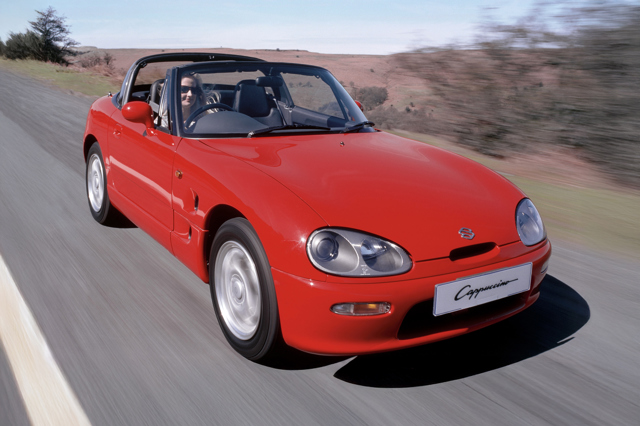
Power comes from a three-cylinder 660cc turbocharged petrol engine. It may have been limited to just 87mph, but the combination of a light body and that turbo engine meant it was quick off the mark (0-60mpg was 8.0 seconds) and fun to drive. It felt every bit the proper sports car and its front mid-engined and rear-wheel drive set-up was also capable of giving drivers wo wern't careful in the wet a bit of a shock.
The Cappuccino needs to be driven hard to maintain progress, the light weight gives great agility. But the engine thrives on revs (it redlines at 8500rpm and the limiter doesn’t cut in until 9300rpm!) and it’ll probably take more abuse than you feel comfortable giving it.
Part of the Cappuccino's appeal was its 'roof system' It wasn't just a case of roof up or down with the Cappuccino, its three-panel roof meant you coud have a number of configuartions from one panel off, to T-Bar or fully open. Then there was the rear screen, which unusually for this period was glass and contained a de-misting elelment. This could be left up to act as a wind break or unclipped and lowered into the bodywork, transforming the Cappuccinco into a full roadster. The panels themselves are stored in protective bags and – surprisingly – fit in the Cappuccinco's tiny boot.
When cruising the noise can get very tiring – remove the speed restrictor and your eardrums would need major surgery when sitting at the newly available ton. Doing so will also almost certainly lead to reliability problems. But the Cappuccino isn’t about ultimate speed – it’s on B-roads that the fun starts. With a 50:50 weight distribution and a nicely set up chassis, it handles like a proper sports car. Strong brakes and plenty of grip from the 165/65x14 tyres also mean handling is safe even at high speed. It steers well, and the five-speed gearbox is slick and nice to use.
Overall, a delightful little sports car that if well-maintained does not cost the earth to run.
Suzuki Cappuccino (1993 – 1995) Buying Guide
Good
- Tiny 679-725kg sports car just 10' 10" long and 4' 7" wide.
- Powered by turbocharged 657cc engine developing 64bhp and getting it to 60 in 11.3 seconds.
- Top speed limited to 83mph.
- Red lined at 9300rpm, but peak power at 6500rpm.
- Top composed of folding canvas back with two hard top panels overhead.
- According to the VOSA website, there has never been a recall for the Cappuccino
Bad
- That revvy engine can do itself in and some parts are hard to find.
- UK owner's club seems to have disappeared.
Watch
- When buying you need to be very aware that these cars rust.
- Floorpans, sills and arches can all rot, although many of the lower exterior panels are plastic anyway – but the panels behind them aren’t.
- Check around the rear number plate as it is susceptible to corrosion, as is the engine bay. Buy a car that’s been Waxoyled from new.
- The roof panels, boot lid and bonnet are all made of aluminium, and are fragile. Check these carefully as they are expensive to repace. The seals that go round all these panels crack and let water into the cabin – a complete set will add up to over £150 but the biggest problem is a damp interior.
- Oil changing every 3000 miles to protect the turbocharger. This is usually very reliable but if it's a £2000 fix. Check for white turbo smoke and, while you should be able to hear the turbo, it shouldn’t be particularly loud.
- If the car has been chipped chipped, the chances are that ithas been thrashed.
- Cambelt need changing at 60,000 miles – make sure this has happened.
- Most equipment, such as air-conditioning and electric windows, are usually trouble-free.
- Parts prices are high; new exhaust is over £400, as is a headlight unit. A starter motor is more than £200, and if you need to replace the centre and side panels for the roof you’re looking at £750.
- If you can't tell whether you're looking at a grey import or not, take a look at the indicator casing If it sits flush with the bodywork, it's an official UK car, if not it's a grey import.
- To meet type approval, there were 23 changes to make the Cappuccino suitable for the UK market and these indicator cases were one of them.
- Rear brake calipers prone to leaks. Rubber seal around side windows prone to cracking and leakage.