
Best cheap classic cars for 2026
Soon you won't be able to buy a new petrol or diesel car. What's on offer is already less exciting than even five years ago and mostly SUV-shaped. If you want a convertible, a sonorous V8, or old-fashioned simplicity you need a classic car.
And there's good news. For now, at least, it still costs less than the deposit on many new cars to buy an exciting, distinctive classic you can drive everyday.
There are plenty of cheap classic cars on the market, particularly since MoT exemption has brought many sad seventies survivors blinking into the daylight out of lockups and barns.
Buy with your heart and you'll want to keep it in good condition no matter what, so buy with your head to make sure you can afford to do so. Join a club or online forum, search for mentions of that specific car from previous owners, and check the V5 issue date and MoT history online when possible.
Don't forget some old-school checks, too - a magnet for filler, a tape measure to check ride height and suspicious clearances, and an eye for overspray and blow-over paint in the engine bay and underneath. We've put together a quick guide to some bodges that are as classic as the cars themselves at the end of this list.
The classic car market is lively and occasionally unpredictable, but buying in winter is a good time to find bargains. Keep reading for our guide to the top ten cheap classic cars to buy for 2026.
You may also like:
MG B GT (1965-1980)
- Safety, fast - and safety in numbers
- Immensely popular and well supported
- Undeniably classic style and experience
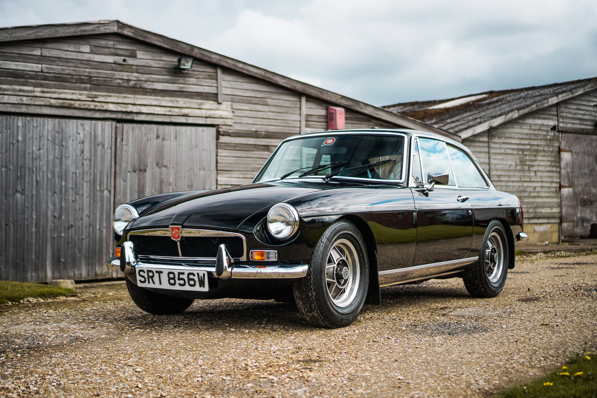
We're sorry, this is such an obvious choice – and yet, the MG B GT is, without a doubt, the most sensible and authentic cheap classic car you can buy and use in the UK. Values usually reflect condition and there are so many guides and reviews that you'll find an answer for any problem and a pointer for any bodge to be avoided.
While you can get technically better classic cars for the money, they can't match the ease of maintaining an MG B. Everything you need is available and most parts for repair or restoration are very affordable. Modifications to improve handling, economy and performance are plentiful and proven – and if your car doesn't deteriorate a lot in use, it's unlikely to depreciate. The three-door fastback GT is practical, but still feels open-air with the common option of a Webasto sliding roof. The less-practical Roadster costs more and often rusts more due to the potential for leaks.
And rust is by far the biggest drawback of this classic. Always a weakness for the MG B, 1970s examples are usually worse and we would recommend spending more on a sorted example from a dealer sold with some consumer protection (you will find cars from around £4000 in this class).
As a daily driver with on-street parking, get the cheapest working example with a recent MoT (if it won't pass, it shouldn't be on the road) and check it thoroughly. Most problems that happen when you own it can be fixed, so put the effort into avoiding buying hidden existing ones that put you off the car before you're attached to it.
Ford Focus Mk1 (1998 to 2007)
- Ford switches to quality, rather than cost, to win customers
- Groundbreaking style introduces trendsetting engineering
- Ride and handling set new benchmarks
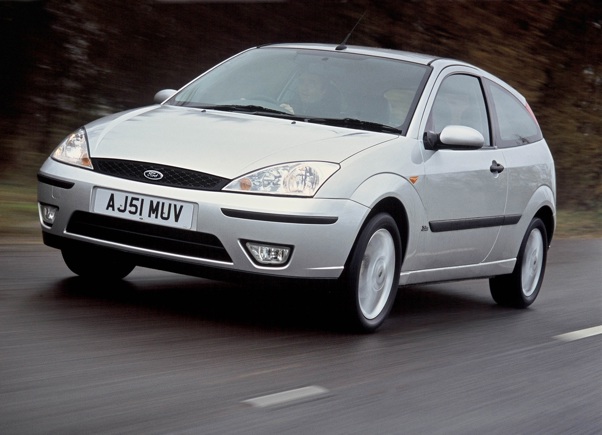
Classic cars often represent a significant change in the industry - and for consummate family car creators Ford, the Ford Focus represents an immense leap forward in originality, quality and style. Now approaching its 30th birthday the Focus marked the end of the 20th-century Escort line.
The biggest change was not the striking 'New Edge' design language and stylish interior. Underneath, the sophisticated suspension and engineering positioned the Focus ahead of rivals on the road, rather than the pricelist. In contrast to the amount invested in the previous Ford Escort which rehashed old ideas and was derided by critics, the Focus paid off – earning praise, charming buyers and reinventing Ford's image as an aspirational brand against a backdrop of upmarket marques becoming mainstream.
Sensible money will chase the ST170. Fast Fords are always a good idea if you want to invest in a classic and they're usually great fun to drive if you just want to enjoy it. These are still cheap, though they're getting shabby and in need of maintenance at the lower end of the market. Go for the 111PS 1.6-litre for a good balance of economy and performance, and if you do unearth the rare 2.0-litre Turbo Focus RS - keep it locked up and safe.
Triumph Herald (1959-1971)
- Swinging Sixties style and impressive agility
- Easy maintenance, ideal for learning repair and restoration
- Benefits from some modern upgrades
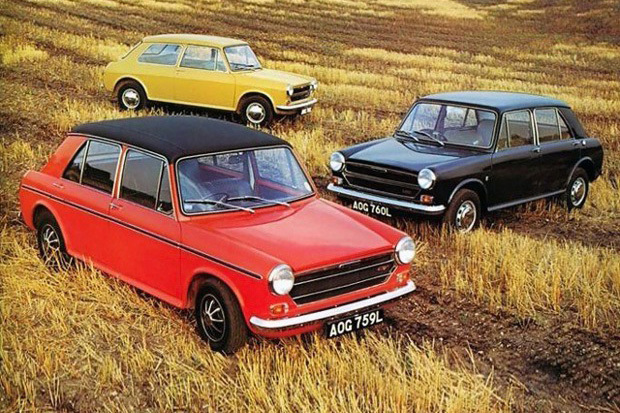
You can get a proper classic car you can drive everyday for less than £2500. A surprising number of British models are on offer here – from the unloved Austin Allegro and it's predecessor, the adorable 'ADO16' series of BMC small family cars, to shabby examples of the Metro, MG B GT and Morris Minor.
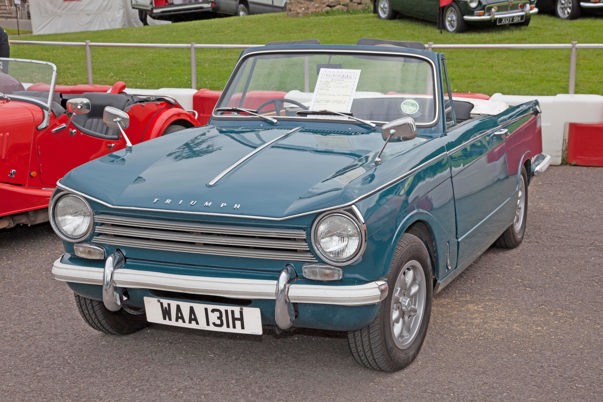
But if you want something really stylish that wears its classic engineering on its sleeve, the Triumph Herald (or six-cylinder, upmarket Triumph Vitesse) is the one to go for. Introduced in 1959 and produced until 1971, the narrow, agile two-door saloon was considered dated at launch for its use of a separate chassis.
Yet it's that chassis that makes the Herald such a smart choice. Rust repairs are relatively easy and the rear-wheel drive layout gives it a turning circle that could shame a London Taxi.
Lifting the front-hinged, flip-front bonnet gives impressive access to the suspension and engine, Herald bodies are modular, designed to be made as saloon, convertible, coupe and small estate or van (the Triumph Courier), which makes them easy to maintain – and repair panels are fairly easy to get.
The 1.3-litre 13/60 - with 'angry eyebrows' inherited from the six-cylinder Vitesse - is not as cute as the early 948cc or 1200, but it's quicker and safer in modern traffic. For a serious daily driver, the bolt-together nature of the Herald means upgrades to brakes, engine, suspension and even the gearbox can be accomplished in a way that allows the car to be returned to original - many parts from the Triumph Spitfire and GT6 are a straight swap.
Beware poor convertible conversions from saloons - the good cheap option is the Tristan conversion which can be spotted by the T-bar roof and roll-over bar design. Don't be conned into paying as much for this as a genuine convertible. Watch out for bulkhead rust and rot on the chassis itself and outriggers. The swing-axle design can also be quite unforgiving of careless, extreme driving, so it is worth taking time to adjust to how the car feels before trying to keep up with modern models on bendy roads.
Mazda MX-5 (1998 to 2005)
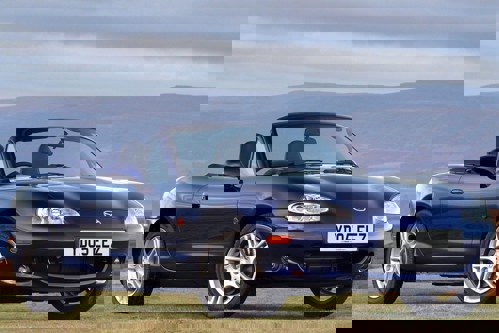
- A classic roadster that's easy to live with
- Some familiar classic problems remain
- But reliability exceeds any '60s roadster
If you're dreaming of the driving experience exemplified by '60s roadsters, but don't want '60s handling and reliability, there's one obvious choice. The Mazda MX-5. Amazingly, the original was branded a 'rebirth' of an extinct breed, when the last MG Bs were sold in 1981. That underlines just how advanced the Mazda was next to the 'original' inspiration.
However, the first generation of MX-5 is a classic in its own right now and definitely shares the MG's ability to rust. Survivors of the pop-up light 1989-1997 'NA' series are typically well over £5000 if they're not rotten. The second generation 'NB' was a substantial facelift that lost the distinctive face and gained some mechanical improvements.
It retains the same simple, enjoyable character. And ability to rust. You can get a good one for around £2000 and running projects with some MoT for less. Check the MoT history online, inspect the sills and floor, inner wing and rails near the engine and subframe. Be wary of anything that's damp inside or has been wrapped or resprayed very recently.
Six-speed gearboxes are a little weaker than the five-speed and these are popular track day cars. Depending on your taste, that means great potential for fun, or great potential for buying a car that's been abused and will never quite be perfect. Part of the charm of the MX-5 is how easy it is to enjoy an imperfect one. The third-generation MX-5 is bigger, more refined and a little less mechanically robust, but it's worth checking out if you can't find an NB in your budget.
MG TF (2002-2008)
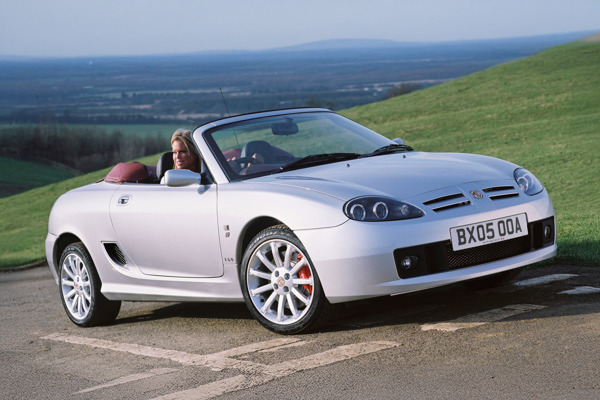
- A final flourish from the resourceful engineers at MG Rover
- Lotus Elise-esque experience with comfort and low costs
- Conventional suspension and sharper styling
The MG TF is, by most measures, the last 'true' MG. Remaining true to MG's roots, it took the components of a typical family car and made it quick, competitive and desirable. In terms of bravery and results the MG F and TF could be argued to be the best MGs ever made.
Starting out with the subframes of the Metro, the engine was positioned in the middle, the suspension independent all around and the cabin space and boot were generous to remain true to MG's aim of making everyday sports cars. The MG F retained the compliant interconnected fluid-over-gas suspension of the Metro – the TF swapped over to more conventional coil springs, losing some comfort but becoming sharper at speed, more reliable and ultimately, a better car to buy as a cheap classic.
Very late cars were produced during the ashes of MG's acquisition by SAIC and are collectable, but have poor paint finish and overall quality. Get the earliest MG TF and look for upgrades such as a coolant level sensor, multi-layer head gasket and a clutch actuator arm tapped for a grease nipple. The reputation for failed head gaskets is fair, but repair is often cheaper than a major service on a new car. As always, watch out for rust - but as a rule, this is a classic car that will thrive with basic care, rather than needing constant attention just to keep it intact.
Hillman Minx Series I to VI (1955-1966)
.jpg?rmode=max&width=603&height=452)
- 'Audax' series from Rootes has transatlantic style
- Sunbeam, Singer and Humber variants available
- Relatively quick, good handling against rivals
Incredibly, you can still get a 1950s car with an American aesthetic for under £3000 - at the time of writing we saw a usable Sunbeam Rapier (as pictured above) for £2600 and a very clean and tidy Hillman Minx Convertible at £5500, highlighting that spending a little more could get something really nice. These are classics for the enthusiast rather than an old car that can step into same role as a modern used car at the same budget, but they're distinctive and rewarding to drive. If you're struggling to find choice, it's worth looking at the larger Hillman Super Minx as well.
Rootes was once a dominant and creative force in the British motor industry. The 1955 'Audax' series was an attempt to transform a dull-but-worthy range of cars into something exciting – with foundations penned by American stylist Raymond Loewy. Even after the influence of engineers and Rootes' own stylists, the connection with striking 1950s Studebakers can be found throughout.
It wasn't just about looks. The previous Minx was largely pre-war technology – the 1955 Sunbeam Rapier and related '56 Minx and badge-engineered models used an all-new OHV engine that formed the backbone of the firm's offerings, increasing from 1390cc to 1725cc and offering up to 112PS in 'Holbay' tuned form. One of the first cars with a dual-clutch automatic option and successful in motorsport, choosing any one of the Rootes Audax family of cars can be rewarding to drive and stand out at shows dominated by Austin, Morris or Ford rivals.
SAAB 900 and 99 (1968-1994)
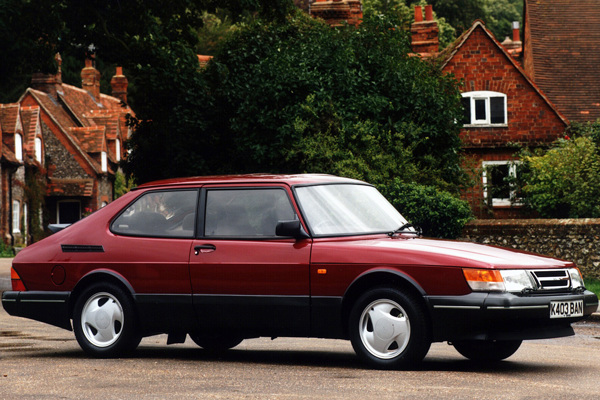
- A Swedish icon with presence and performance
- Safe, refined and sometimes, quick
- Relatively easy to maintain, currently undervalued
Based on the 1968 Saab 99, the 1979 Saab 900 offers all the best aspects of driving a classic. Something that is uniquely engineered, highlighting a geographical or cultural difference. A shape and image tied into popular culture, present in films and TV. Most of all, a personality. As the car industry consolidated, all these things were slowly lost – but you can always go to the back catalogue.
Choose the earlier Saab 99 (produced alongside the 900 until 1984, then 1987 as the Saab 90) and you've got a rarity – but the advanced design's potential is proven, as the foundations survived until 1994 as the Saab 900 range. Every drive, you'll notice the wrap-around windscreen, doors that include the sill in the opening section to move snow and mud away from the step and an ignition switch in the centre that also locks the car in gear.
Forget the famous turbocharged Saabs when looking for a cheap classic. Collectors recognised their value years ago. For a bargain Saab 900 look at convertibles, non-turbo models and cars that need a little bit of work if you have the skills or a good mechanic available. Rust areas include the channels for the driveshafts as well as the floor, windscreen surround and general age-related neglect. The manual gearbox and electronic ignition system provide the most common failures. £2000 can secure a shabby convertible needing refurbishment, £4000 should get a nice 16V combi/hatchback.
Austin 1100/1300 (1962-1974)
.jpg?rmode=max&width=500&height=375)
- Upscaled Mini has safe handling, space and style
- From Austin, to Vanden Plas, there's a model for every taste
- Road going models from £1500, but beware of rust
Take a glance at any 1960s British film, TV show or comic book and you'll see a distinctive little car. Round lights, angled grille and petite fins on the rear, the British Motor Corporation's front-wheel drive rival for the Ford Anglia/Escort and Vauxhall Viva was lauded for its secure Mini-esque handling, fluid-sprung comfort and efficient use of interior space.
When the BMC ADO16 series made its debut, it wasn't just the technology that turned heads. Marketing used branding to match any modern mega-corporation's efforts, The name on the car broadcast your status in life - from the basic and unpretentious Morris or Austin 1100, through traditional Woleseley, quick Riley and MG. In later years there was even a boy-racer chic 1300GT. At the top of the tree was the Van Den Plas Princess 1300 with Bentley-style leather and wood veneer, picnic tables for passengers and an upright, bold grille.
We've seen road legal, usable examples for as little as £1500 that could be used daily with proactive maintenance. A more realistic budget is around £3500 for an Austin or Morris, more for a Countryman or Traveller and around £7000 for a really nice GT, Riley or Woleseley.
Rust was a problem when the cars were new and although well over two million were sold the survival rate is low – not helped by their use as a donor for Mini engines and kit cars. Check the sills, under the carpets front and rear for subframe mounts, the top of the inner wings – pretty much everywhere, really.
Mechanically the engine and gearbox is easy to work on and later cars with an alternator should prove reasonably reliable. Specialists can rebuild the hydrolastic suspension and autojumbles are usually heaving with BMC ADO16 spares even now.
Jaguar S-Type (1999-2008)
.jpg?rmode=max&width=500)
- Rear-wheel drive, luxury trim, low prices
- Once retro, now old enough to be classic
- Still cheap and easy to find parts
The original Jaguar S-Type of the 1960s became a classic almost the moment it launched, thanks to advanced technology and an elegant style that blended traditional cues with a modern style. A used S-Type soon became synonymous with dodgy dealings, anti-establishment behaviour and hedonism.
The reboot of the franchise in 1999 kept a recognisable character, but by then hot hatchbacks and Cosworths claimed the gangster legacy. Jaguar's new S-Type had a 'retired, not tired' vibe and claimed the place vacated by mainstream large saloons such as the Vauxhall Senator and Ford Granada. That wasn't a coincidence - underneath, the S-Type owes a lot to the final era of Ford Scorpio and the Lincoln LS. Upmarket brands were beginning to take the place of posh trim levels such as Ghia or Van Den Plas.
For fans of simple, but cosseting saloons that don't take up acres of space or lose all composure in bends, this Jaguar is perfect. It's also very affordable, with pre-facelift models still below £2000 with some MoT, and £5000 securing excellent, cared for examples of most models. You might even find a supercharged S-Type R in this budget, though it will almost certainly need work. Watch out for rust and while the 2.7-litre V6 diesel is quick and economical, it's best avoided unless perfectly maintained.
Toyota Previa (1990-1999)
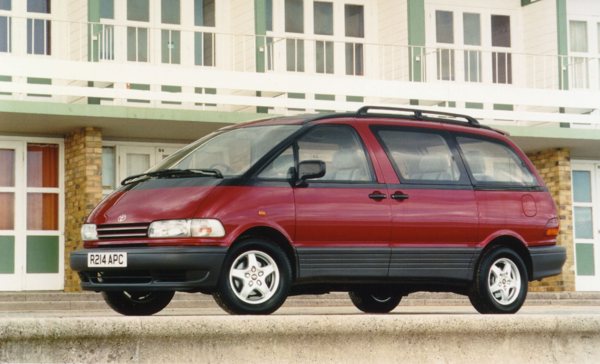
- Unusual MPV broke new ground
- A rare car, in a class that has few survivors
- Parts supply is better than rivals
Classic cars should reflect the trends of the era. And yet there's one genre that steadfastly resists exposure – the MPV, or multi-purpose vehicle. Preserved Renault Espaces are rare enough and the competition has faced scrappage schemes and family life several times over. Its no wonder you'll struggle to grab a Ford Galaxy or snap up a VW Sharan while Citroen's Synergie evades the classifieds.
Trust Toyota to make the one that lasts. You can still find a Previa (and the imported Estima equivalent) in working order for well under £3000. You get a spaceship-style roomy six, seven or eight seater that offered a more enjoyable driving experience than the van-like offerings from Europe and America. That's thanks to the underfloor mid-mounted engine and rear wheel drive (some imports are four-wheel drive). Servicing is awkward as a result, but parts are readily available and overall, these are reliable classics.
Watch out for head gasket failure, particularly on imported diesels and overall neglect, broken interior trim, and rust on inner wings and front crossmembers. Coolant leaks from rear cabin heating pipes can be overlooked, so where applicable check heating throughout. If you can't find a Previa, the Toyota Picnic and RAV4 also offer good value as a cheap classic Toyota.
How to spot classic bodges
Buying a classic car in the 21st century is generally safer than in the 1970s to end of the 1990s. Adverts usually feature more, and detailed pictures, the MoT history can be checked online, it's easy to find changes of keeper and if the car's been mentioned on forums, facebook groups or featured in articles.
But MoT exemption and online paperwork does mean that a few old-school bodges have resurfaced, and some classic cars got their classic dodgy-dealer makeovers early in life. It's worth remembering that cars made in the 1970s were often rusty and skirting the scrapyard when less than ten years old, given the situation now where over a third of cars on the road are over 12 years old and many still look good.
Here are five essential gadgets to take to any classic car viewing, and how to use them.
Your smartphone
If you have a recent smartphone, you have a camera, a video camera, a torch and a reference guide all in hand. You can video the underside of the car without having to crawl about too much, use the torch to inspect corners, and check details like VIN plates and specifications against many reference sources.
A friend or a friendly mechanic
It's always been useful to have a second pair of eyes when checking a car, old or new. If you're taken for a test drive, a friend following can spot if the car is smoking, crabbing due to bad chassis alignment, or otherwise looks like it's misbehaving. They can also give you a second opinion if your gut is saying run, but your heart is saying buy.
A magnet
Yes, filler still exists. It won't be much help on plastic or aluminium panels, but the old fashioned magnet will tell you if there's thick filler or bodging in the bodywork. Check sills, arches and anywhere that has had new paint (look for overspray on window rubbers, door handles or on really lazy examples we've seen, the whole engine and half the suspension).
If the magnet sticks strongly to a panel such as the roof or bootlid, but falls off near the headlight or bottom of the door, that's not metal anymore. Use it underneath as well, particularly if there's a lot of fresh underseal.
Disposable gloves
Check the mucky stuff like suspension joints and driveshafts, and run your hand along sill edges and chassis sections with confidence. They will also reduce the risk of cuts or scratches when checking the inside/hidden edge of tyres for wear, bulges and damage.
A turkey baster
You could also use a syringe. Many older cars don't have clear bottles for fluids, the most important of which you can easily check is coolant. A turkey baster or large clear syringe will let you view the colour and condition of what's in the system without the expense of a coolant tester.
Clear water or rusty, sludge, is a bad sign - vibrant colour means a recent change, more of a muddy tinge of green, blue, red or orange suggests it is due. Any sign of oil means getting a professional opinion is essential. Don't mix fluids with this tool - even coolant types. Rinse it out between viewing cars.
Use your eyes, check the car's paperwork, and make sure the story adds up from the owner. Restorations and history mean that classic cars can have a few bits that don't fit perfectly or match, and what matters is that you are getting something you are happy with for a price that's fair and matches the description.
Where’s the best place to buy a cheap classic car?
You’re unlikely to find a cheap classic car on an auction website, because you’ll almost certainly be outbid by a fellow enthusiast. That said, there are still bargains to be found on eBay, especially if the car has been listed incorrectly. We’d recommend Facebook Marketplace, because while you’ll have to sift through a lot of bangers, there are plenty of bargains to be found. Also look out for signs on shop noticeboards or ads in the local newspaper.
Can I drive a cheap classic car to work?
There’s nothing to stop you driving a classic car to work, but check that your insurance policy includes business use and commuting. If you’re mixing it with modern traffic, it’s worth remembering that classic cars lack the active and passive safety systems we take for granted today. For the best balance, choose a car from the 1990s, as these tend to be well built and should come with the likes of ABS brakes and airbags.
Should I buy a cheap classic car as an investment?
You might be thinking a cheap classic car is a passport to riches. Sadly, this isn’t necessarily so. There’s no saying if or when the current price bubble will burst, so we’d advise buying a classic because you want to own and run it. You may be able to get your money back if the car has been looked after during your ownership, but a profit is far from guaranteed. Don’t forget the cost of upkeep, which can be unpredictable as the ravages of time on your pride and joy become apparent.
