
Best turbocharged classics
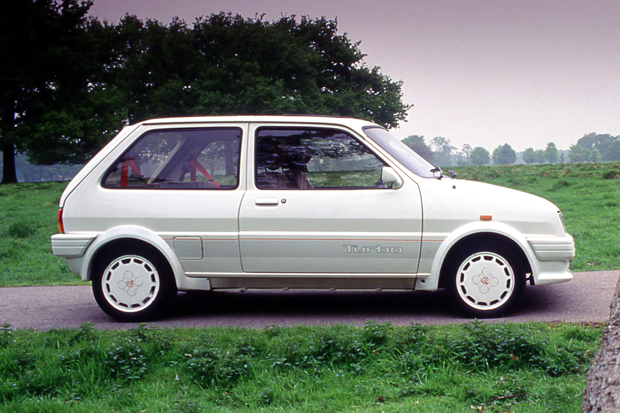
The word turbo has always held a special place among car enthusiast. While turbocharging may be commonplace in modern cars, in the 70s and 80s anything adorned with a 'turbo' badge was pretty special.
Experiments with turbocharged racing cars are almost as old as car racing itself but it took until the 1962 Oldsmobile Jetfire for mass-produced turbo models to reach showrooms.
Even then, the tech was not reliable – but advances in fuelling and computer-aided modelling made the dream possible, and by the late '70s the word 'turbo' meant 'get out of my way', usually with a distinctive whoosh of excess pressure being dumped for the next gear and burst of acceleration.
Here's our guide to the best turbocharged classic cars – and the journey from rarified aggression, to making a large family car have acceptable performance and economy with just a 1.0-litre engine.
Renault 5 GT Turbo (1985-1990)
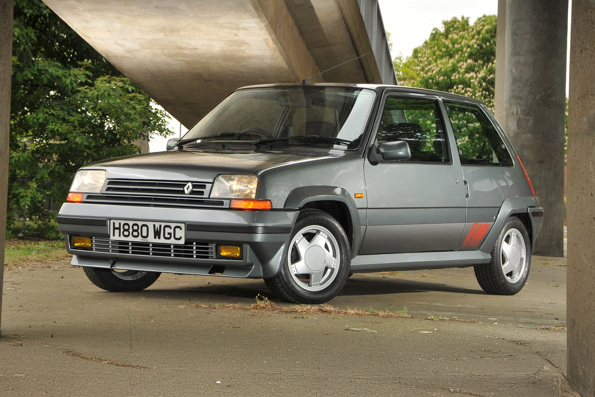
- Second-generation 'Supercinq' was an overnight icon
- Striking bodykit, devastating performance
- Easy to modify and maintain, but rare now
Renault was the first European manufacturer to offer turbocharged models across most of the range, including the Renault 5. While the first 5 Turbo was a mid-engined homologation special that became the limited edition Renault 5 Turbo 2, in 1982 Britain's hot hatch buyers could get a Renault 5 Gordini Turbo with 112PS that could rival the larger Golf GTI and XR3 for pace. Survivors are rare, so for everyday driving or investment alike, we'd go for the second-generation Renault 5 GT Turbo.
An all-new design for the mid-80s, the Super 5 adopted a transverse engine and McPherson strut package that set the template for the Clio and other modern Renaults. Weighing just 750kg, it could reach 62mph in around 7.6 seconds and the proven combination of Garret T3 and 1960s 1.4-litre simplicity was easy to tune.
Too easy, in some ways – changing the bleed valve was cheap and could add 20% more power, without upgrading the engine. Reliability suffered, but by the end of the 1990s many Renault 5 GT Turbos were already abused, crashed, modified and rebuilt, or rusting quietly behind the bodykit.
Unmodified 5 GT Turbos are hard to find and prices start at around £10,000 for something you can use, up to £20,000 and beyond for original, cherished examples. That's in line with the popularity of '80s hot-hatches currently. It's still 1/10th of the cost of a mid-engined R5 Turbo 2 and less than buying a new Renault.5 E-Tech plus you'll find the mechanical parts to keep it going are readily available. Buy on the body condition and lack of interior and trim damage if you want a project.
Saab 99 and 900 Turbo (1978-1994)
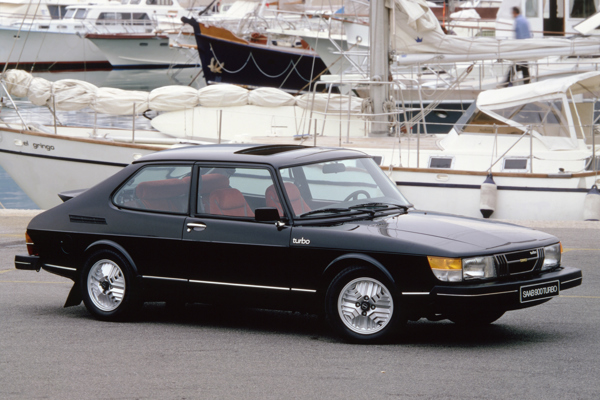
- Boosting performance and sales for quirky brand
- The original is rare, but changed Saab forever
- Find a Saab that hasn't had the turbo modified
There are two cars in Europe that put the word 'turbo' on buyer's shortlists. In 1973 BMW launched the 170PS 2002 Turbo, a car so aggressive that the word 'turbo' appeared in reverse on the front airdam so anyone in front could read it in the mirror. In 1975 BMW stopped making it and wouldn't produce a turbo petrol car for the UK again until 2006.
Saab's 99 Turbo of 1978 extracted 145PS from its 2.0-litre 8-valve engine and unlike BMW's effort was an almost instant success. The engine evolved alongside the model range through 900 Turbo, 16-valve and special editions to deliver 185PS thanks to sophisticated controls that would allow the engine to burn fuel at the leanest, most efficient mixture without affecting reliability.
While the original 99 is rare and the turbo, expensive, the 1980s Saab 900 is readily available on used car marketplaces such as Facebook, Gumtree or eBay. The best are snapped up to appear for somewhat more on classic sales sites.
You don't need to spend more than £10,000 to get a really nice example and you may find 8-valve models for under £5000 in usable condition. Look for rust around the front inner wings and driveshaft channels and beware noisy gearboxes. If you find a rust-free bargain it's worth repairing.
MG Metro Turbo (1984-1990)
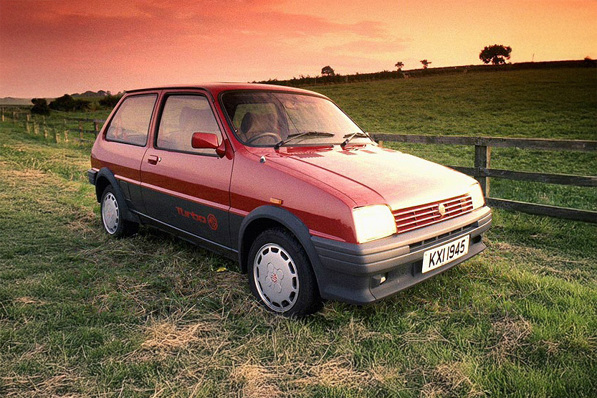
- Ancient Austin fundamentals given a boost
- Mini-style handling with plenty of power
- Interior doesn't wear well, but looks great
Launched in 1983 the MG Metro Turbo was the first of a trio of turbocharged MGs that includes the surprising MG Montego Turbo and the limited edition MG Maestro Turbo. Far more MG Metros were produced, making them easier to find now and they're a shining example of how a bit of performance and some stickers and plastic can add appeal far beyond the foundations.
Initial details such as red seatbelts were completed by supportive seats and high-tech dash graphics by the 1985 facelift, which effectively modernised the Metro and added showroom appeal.
At its heart the MG Metro is little changed from a 1959 Mini. The same A-series engine with four-speed gearbox in the sump, the same awkward driving position and another interpretation of fluid-over-gas suspension. Using a carburettor modified to deal with the pressure of turbocharging and many upgraded engine internals, the MG Metro Turbo 1275cc achieved 94PS (twice the power of a standard Austin Metro) and could hit 60mph in 9.9 seconds.
At least, it could if it lasted that long. Austin-Rover's decision to keep the four-speed gearbox meant it would break under power.
Even before the boy racers had been tuning the delicate balance of vacuum controls the MG Metro Turbo needed upgrades – the good news is that modern technology can give the MG a strong five-speed gearbox, better fuelling and extract up to 200PS from the A-series. Expect to pay more than £10,000 for a good example – projects will need careful checking for rust.
Ford Sierra Sapphire RS Cosworth
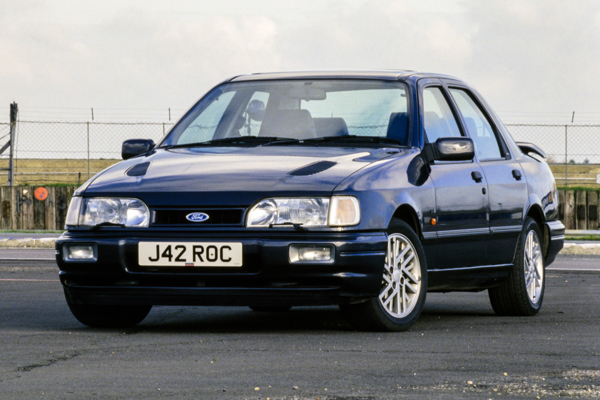
- Blue collar performance is now a blue-chip classic
- The Sapphire remains relatively affordable
- There are better cars – but few are as legendary
Believe it or not, there was a time when the Sierra Sapphire RS Cosworth was just another secondhand car. Unlike the whale-tailed original and RS500, or the later Escort RS Cosworth, the four-door model in original rear-wheel drive, or later 4x4 flavour, was quite subtle. Add to that the rally success of Subaru and bad reputation for theft, accidents and abuse meant the 204PS 2.0-litre Ford looked more like a liability than a prize to used car buyers in the late '90s and early 2000s.
Yet the name Cosworth never lost its appeal and you can't argue away legends and dreams with boring data. Like the Ford Capri before it, the whole package of what the car says, what it means, is greater than the tech and the spec – and in fairness to Ford the RS Cosworth was only truly outclassed after it ended production.
Three-door Cosworths have entered the six-figure sum market of investment classics, but you'll find a reasonable example of a Sierra Sapphire RS Cosworth for around £30,000. It's up to you if you want the security of 4x4 or simplicity of rear-wheel drive. There's little difference in value – and it's worth noting this is still half the price of the Escort that was based on a shortened Sierra platform.
Join the Ford RS Owners Club and do some research before buying, as very few of these cars are as they left the factory and not everything is an improvement.
Audi TT Roadster (1999-2006)
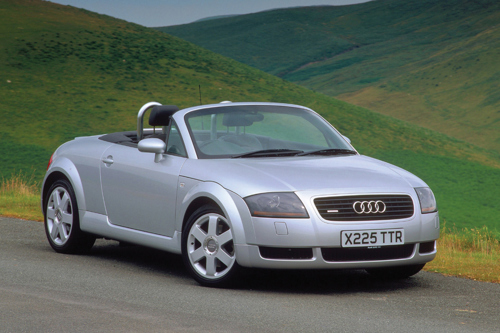
- VW Group's popular 1.8T meets classic roadster style
- Ubiquitous 21st-century turbo is reliable, easy to tune
- Also available in Volkswagen, Skoda and SEAT flavour
With the original Audi quattro now priced into the stratosphere and related five-cylinder turbo models either sacrificed for spares, or following it on the way up, the Audi TT is the sensible classic to buy and look after. It's where you'll find the ubiquitous EA113 1.8-litre four-cylinder 20V turbo producing between 150PS and 240PSs for less than £5000. Much less – shabby but road-legal examples can be half that, though they're likely to be FWD 150PS models rather than the 225PS quattro.
Confident handling, a bespoke two-seater feel with some interesting interior details (a theme that carries on throughout the TT's evolution) and generally high quality with low running costs make the Audi TT a satisfying modern classic and the vast majority are the four-cylinder 1.8 turbo – the 3.2 VR6 is rare.
The original generation predates Britain's obsession with diesel-everything, so you'll want to open the roof and hear the engine – particularly if some money has been spent on tuning it.
Tuning is a blessing and a curse with these engines, as many can get a short-term boost with a simple remap. We'd stick to 180PS models or factory 225PS if looking for a quick car, but specialists know the intricacies of each generation and can advise if you want to build something potent. Audi's quickest original 1.8T is the 240PS TT Sport Coupe, which may be worth holding onto if you find a cheap and original example.
Subaru Impreza Turbo 2000 and WRX STi (1992 to 2000)
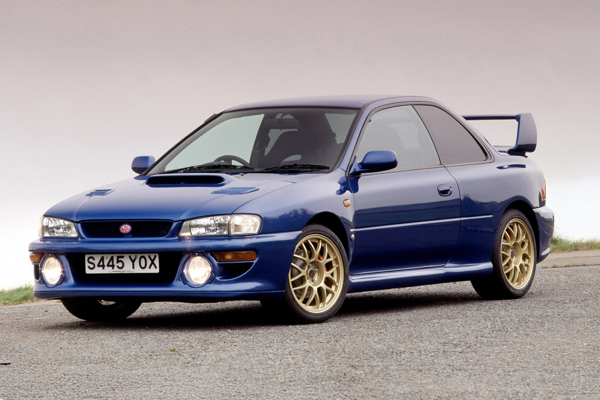
- The original pop-bang all others aspire to
- A rally legend and a great family car
- Rare and expensive now – related models are affordable
Many Japanese manufacturers introduced turbocharged models during the 1980s, but rivals Subaru and Mitsubishi were by far the most prominently branded.
When the Subaru Impreza launched in 1992, it brought the 4x4 and flat-four brand out of the countryside and into town centres, with the Turbo 2000 a bit of a sleeper until Subaru's World Rally team and driver Colin McRae claimed the WRC championship in 1995. A celebratory run of 200 Turbo 2000s in Rally Blue with gold wheels and McRae decals set the template for aspirational rally drivers across the UK and beyond.
Over seven years and several evolutions such as the WRX STi, RB5 and Prodrive P1 – that's excluding JDM versions – the original Impreza offers between 237PS and 305PS before modifications.
Few are unmodified, and even from the factory the 280PS models from 1997-on were reputed to be higher, but limited by Japan's 'gentleman's agreement' not to promote more than 280PS power figures. Imports may be easier to get than original UK cars now and clean examples are still being shipped here, at a price. Japanese collectors want the good ones just as much as the UK market.
Buying a Subaru Impreza 2000 Turbo depends very much on how much authenticity and history you want. Genuine UK models and limited editions are comfortably into five figures, but shabby modified cars and imports start at around £7000 for something that should be ready to use. Rust, or repairs from extensive rust, should be your biggest concern and then accident damage. Finding a similarly-quick Legacy or Forester may be cheaper - but it won't be 'a Scooby'.
Citroen BX 17 TZD and TXD (1988-1994)
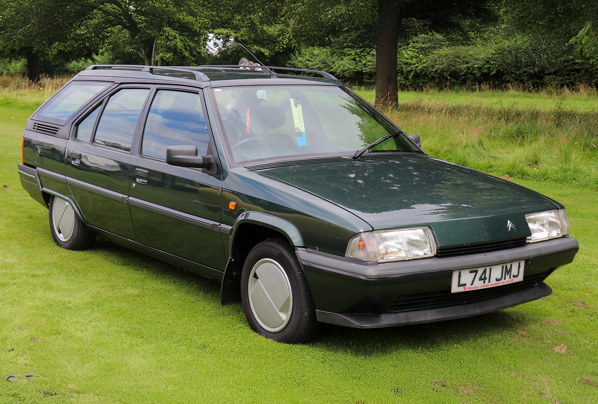
- The template for diesel efficiency
- Petrol-style performance when diesels were 'slow'
- Only 90PS, but in a lightweight body
Of the early turbo diesel cars offered, it's the Citroen BX that encompasses both how the diesel engine won mass appeal and how the potential of diesel was squandered by allowing heavier cars to remain economical.
Citroen had already gained respect for the Visa 17D while Peugeot's 205 showed that a turbocharged diesel could be used in a small car to great effect. But in 1988 Citroen customers could choose the BX 17 TZD with 90PS instead of the 78PS in the similarly-sized Peugeot 309 thanks to an intercooled turbocharger.
In the lightweight BX, it was enough to reach 62mph in 10.8 seconds - rivalling the less economical 1.6-litre BX16 and even catalysed versions of the BX19, but the in-gear performance was where the BX (and many diesels) won fans. All this and 50mpg potential when petrol models would rarely exceed 35mpg. Ride comfort is old-school Citroen floaty, though the steering lacks the powered self-centering ability of the CX.
Offered with generous equipment, as either a five-door hatchback with a large boot or a cavernous estate that makes the most of the oleopneumatic suspension's height correction and ability to lower the car to load heavy things, a £2500 to £5000 Citroen BX diesel is a very sensible classic for everyday use.
You'll want to stock up on parts when you find them and work hard to keep rust at bay. Check ahead of the rear arches, inside the inner wings and scuttle, B-pillar to sill and all around the boot floor. A Citroen BX is light and once rust gets hold of the thin metal it doesn't last long.
Toyota Supra (1993 to 2002)
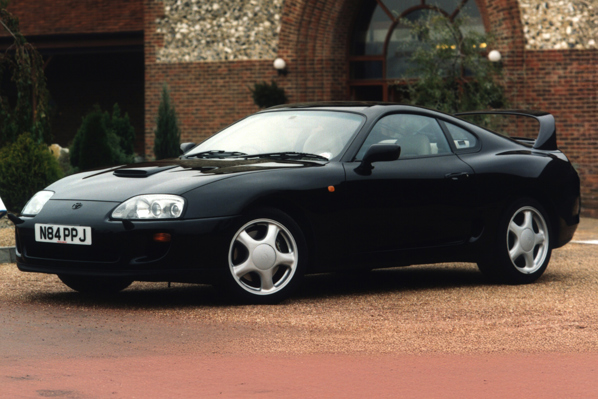
- Sequential turbocharging, robust straight-six
- Legendary image, plenty available
- Not cheap, but not too hard to maintain
Around 1992, Japan's performance car obsession resulted in three relatively mainstream models with sequential twin-turbocharging. This approach to minimising lag and making the most of a big turbo at high RPM was pioneered for the Porsche 959 rally car, but Toyota, Mazda and Subaru put them on straight-six, rotary and boxer engines respectively.
Of those, the Toyota Supra is probably the most robust and easiest to live with, though it's not cheap. A Mk4 Supra will easily cost £30,000 for a running project, more for a good car or original UK market models.
Imports are plentiful and spares supply is good, but perhaps the most important aspect is the 2JZ-GTE engine. Typically hovering around 280PS as standard, it's been known to take considerably more with relatively affordable modifications, so a stock one should be very reliable.
Thanks to the same Fast & Furious film franchise that has kept many obscure JDM and American models visible to a wider audience, the Supra is unlikely to lose money if you buy well and look after it. It will probably increase in value, as its appeal is not limited to just the UK market. Look for rust, accident damage and evidence of poor quality modifications and do plenty of year and model specific research before spending big money on an alleged rarity.
Bentley Turbo R (1987-1999)
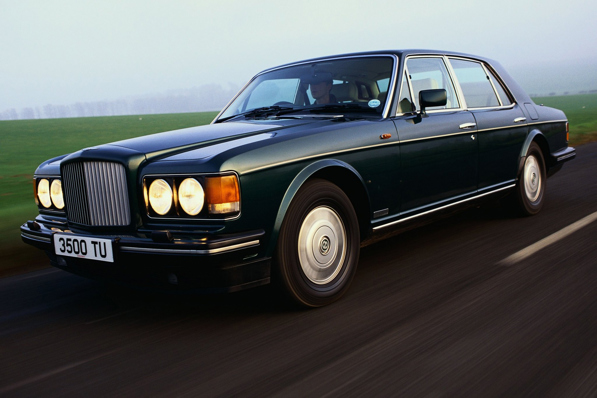
- British brute has old school charm
- Surprisingly affordable to buy
- Inevitably ruinous to maintain well
By the 1980s, Bentley – once pioneers of supercharging - was a sister brand to Rolls Royce offering badge-engineered versions of the same bodies and technology aimed at a more sporting or youthful market. Square-shaped and imposing, the Mulsanne Turbo had 50% more power than the 'adequate' numbers shared by the Rolls-Royce Silver Spirit-derived models, but it's the 1985-on Turbo R that comes closest to being a truly sporting Bentley again. 1987-on got fuel injection and that's where to start looking.
These Bentleys did not sell in the thousands like the modern Continental GT and they cost an astonishing amount of money to order – yet, despite a tendency to rust, incredible thirst, and eye-watering spares and maintenance costs, there are plenty of survivors to choose from.
Non-turbo Mulsanne-derivatives such as the Eight are almost laughably cheap, with runners starting around £5000 if you're brave, but you'll find reasonable-looking Turbo Rs from around £12,000 from dealers and £20,000 should give you a broad selection of late, cherished and well-maintained examples that should give a summer of enjoyable drives before the maintenance costs bring you back to reality.
Rust is a problem, particularly on screen surrounds, but can be easier to deal with than damaged interior trim. The engine and turbocharger is generally very robust and the gearbox is as old-school as this Bentley's first buyer profile – but the braking and suspension system owes a lot to Citroen high-pressure setups, yet somehow, more complicated.
Four-figure bills for tyres and learning about wood veneer restoration are just the start. Running a Bentley on the cheap is why there are so many cheap examples and even those are worth a shot if you're confident at DIY and have some budget for spares – you'll have owned a classic Bentley and one of the true performance models at that.
Volkswagen Polo GTI (2010-2015)
.jpg?rmode=max&width=500)
- Almost a classic - buy now, before it is
- Cheap fun, with interesting twincharging technology
- Economical and quick – like a Golf GTI used to be
You wouldn't expect the VW Polo to be carrying something particularly advanced under the bonnet, but in 2010 a new Polo GTI carried 180PS of Volkswagen group's most advanced small engine for years. The 1.4-litre TSI combines both supercharging and turbocharging to deliver the same power as the turbocharged 1.8-litre models before it, but with much better economy.
The result is a small, solid-feeling hatch that achieves 62mph in 6.9 seconds and has in-gear performance to make anyone used to working a 16V engine smile. If the engine had made its debut in the Polo, this car would already be a legend – but it can be found in the Golf, Scirocco, Passat, various SEAT models and the contemporary Skoda Fabia vRS if the Polo isn't to your taste.
The highest-performance version could be found in the Audi A1 – but the purity and brand longevity of the VW Polo and GTI marques means we'd stick with the Polo as the ideal 'modern classic' to buy with this almost unique technology. It's a little easier to find than the JDM Nissan March (Micra) Superturbo, after all.
Expect to pay between £4500 for a usable but tired example and £8000 for a low mileage, clean one from a dealer. Don't forget to check that the DSG gearbox has been maintained as well as the engine and watch out for carbon build up at higher mileages typical of many direct-injection petrol engines.
One of the biggest problems facing early turbocharged engines was the delay between low RPM and low exhaust pressure, and the turbo getting enough energy to provide a useful boost. Turbo lag meant the cars could bog down, be slow off the mark, despite having plenty of potential in high RPM ranges.
It was so marked that for many smaller hot-hatches such as the Renault Clio going for a 16 valve engine achieved much the same effect at lower cost, which is one reason why Ford's RS Turbo and Renaults wide range of turbo models took a break. The other was the insurance implication of the hot-hatch era - GTI, Turbo, anything which signposted a high-performance model was treated with suspicion and high ratings.
What is a twin-turbo?
For bigger engines, using more turbochargers could help reduce lag and achieve a wider power band, particularly for V6 and V8 designs. Maserati used two small turbos on the 1981 BiTurbo V6 to good effect, though they were almost as crude as two MG Metro Turbos joined together.
At the end of the 1980s Porsche used a different approach for the 959, with a small, then big, turbo working sequentially. The first sequential twin-turbo cars normal people could afford came from Japan in the form of the 1992 Mazda RX-7 FD, the 1993 Toyota Supra A80, and the second-generation Subaru Legacy GT gained a sequential twin-turbo on manual models. Sequential turbocharging didn't go away - it's a foundation in many modern turbo diesels from BMW and Jaguar.
Some cars used even more turbochargers - Bugatti used four on both the EB110, and the Veyron. VW Group also combined supercharging and turbocharging to improve economy and efficiency as well as power, creating some of the first small-capacity engines to be truly effective in larger cars.
How do you maintain a turbocharged car?
High-performance oil designed for the 15,000rpm or more a turbocharger's turbines spin at was once essential – most modern oils are well up to the task, unless they're specifically designed for classics.
Old-school turbochargers could be starved of oil if you switched the engine off after high-speed driving, so many cars featured a warning to let the car idle for a set period. Aftermarket turbo-timers would do the same thing automatically after the ignition turned off. Frequent oil changes, inspecting the oil for metallic content on higher-mileage cars, is a good precaution as well.
Good cooling system maintenance is essential. Underbonnet temperatures are higher and on cars with liquid intercoolers, any shared components will be particularly stressed. Many have independent circuits which means twice as many systems to check.
Always use the correct rating and type of spark plugs, and on cars without sophisticated engine management ignition timing and fuel mixture are absolutely critical. This means that on carburettor models such as Renault and MG (and the Maserati BiTurbo) the condition of seals, gaskets and jets is as important as the turbo itself. Never diagnose a problem with any turbocharged car without first checking every vacuum hose, actuator and intake gasket in particular, as you may end up adjusting things that were still perfect to compensate for an early sign of a bigger issue.
